Twitter By Post: A History Of Postcards

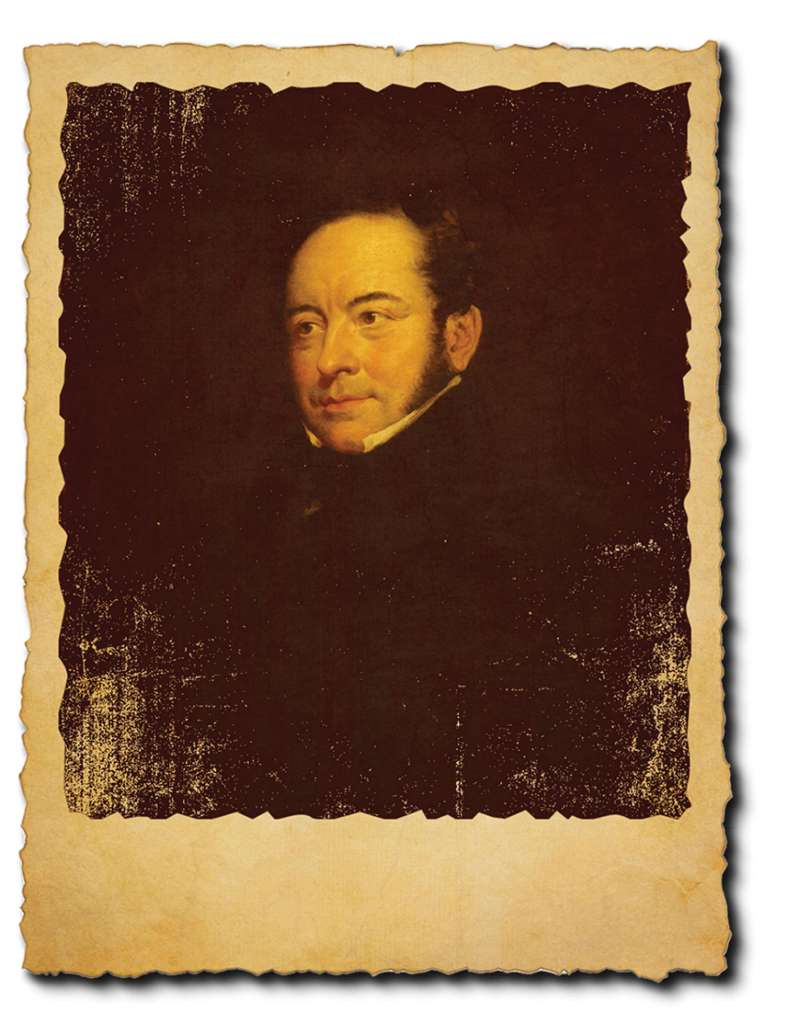
An old postcard depicting a pen and ink drawing, showcasing the history of postcards.
Dear reader! Did you know that a postcard is not just a souvenir? This small piece of thin cardstock has a long history, and the card itself reflects this. A letter without an envelope was once considered improper, but later it helped people send messages from the front lines. Nowadays, some postcards are regarded as real collector’s items.

Topic Last Updated on 09-07-2024

THE FIRST AND MOST EXPENSIVE

Before the mid-19th century, people all around the world used to send letters in envelopes. Envelopes, like the postcards most familiar to us today, were often printed with images of greetings, life scenes, and humorous or festive designs. Regardless, they all served the same function — to protect the information communicated in the letter.

Historians believe that “open” letters — that is, letters without envelopes — began to periodically appear here and there since the establishment of postal services, but they were not common. Whoever heard of leaving a personal message out in the open?

A world traveler depicted in a black coat, holding a postcard.
Theodore Hook

Satirical Postcards

However, the creator of the earliest surviving postcard sent by mail was the English writer Theodore Hook. In 1840, he sent a postcard from Fulham, an area in southwest London, and addressed it to himself. The card was discovered in 2001 in a private collection. Before that, it was believed that the first postcards appeared in Austro-Hungary and the United States. 

Hook was nearly 20 years ahead of everyone else. In his card, he depicted postal workers seated around an enormous ink well, writing down expenses into accounting ledgers with fountain pens of inconceivable sizes. The primary goal of this “open letter” was to ridicule the work of the postal service. 

A historical painting capturing people around a table, with elements of mail and world history.
Theodore Hook’s postcard, Penny Penates, was made of thin cardboard sized 5.1 × 7.9 in. Its front shows a watercolor painting, while the back has the Fulham postmark from July 14th, 1840, and the Penny Black. The British Philatelic Society Expert Commission has confirmed that this postcard and attached stamp are indeed authentic and the oldest in the world

Theodore Hook’s postcard, “Penny Penates,” measuring 5.1 × 7.9 in, features a watercolor painting on the front and bears the Fulham postmark from July 14th, 1840, along with the Penny Black stamp. Authenticated by the British Philatelic Society Expert Commission, it stands as the world’s oldest postcard and stamp.

Hook’s Legacy

Hook, a notorious prankster, evaded punishment for his mischievous antics. His innovative humor extended to mail, as he created the first postcard to feature a precursor to modern postage stamps, known in the UK as the “Penny Black.”

A black and white stamp with a portrait of Queen Elizabeth on a postcard.

The Penny Black was the predecessor of modern postage stamps. Before its creation, postal services charged twice: first, the sender paid based on the letter’s weight, and then the recipient paid for shipping and delivery. The Penny Black was introduced so that the recipient didn’t have to pay for any unexpected mail. The postage stamp was commonly stuck onto envelopes, which is why its appearance on Theodore Hook’s postcard was an exceptional occurrence.

Hook’s caricature is the only postcard imprinted with this stamp. A year after its discovery, in 2002, collector Eugene Gomberg purchased the card at an auction for 31,750 pounds! Thus, in addition to its other achievements, it may also be considered the most expensive postcard in the world. It’s not surprising that Hook’s creation ended up in the Guinness Book of World Records!

Postcards | MASS MESSAGES

Postcards were essentially born out of postal cards and are considered to be one of their forms (except, of course, for Theodore Hook’s unique piece). Originally, postal cards did not have any pictures, and they were prepaid. Postcards, on the other hand, were mailed with stamps. The first postal card was created in 1861 by the American print worker John Charlton

An old postcard with a stamp on it, brimming with the history of postcards from around the world.
Hymen Lipman’s postal card

He patented his invention and sold the rights to Hymen Lipman, the leading stationer of Philadelphia. These postal cards had a patterned frame and an inscription that read, “Lipman’s Postal Card.” One side featured a stamp box and an address line, and the other contained the message.

In parallel with the American postal card, a similar card appeared in Belgium. In 1865, Heinrich von Stephan, general post director and reformer of the German Empire postal service, addressed the Austro-German Postal Conference a proposal to use postal cards in the form of blank sheets of thick paper. His idea was rejected because officials found it too radical and indecent — who would want to send their personal messages out in the open?

Initially, you could only mail postal cards within a single country. At the first Postal Convention of 1875, countries signed a treaty that authorized the international ­exchange of postal cards. These cards did not yet have pictures that filled an entire side, but some bore small ­illustrations.

The Birth of Government-Issued Postal Cards

Several years later, a proposition in favor of postal cards appeared again — this time, in a newspaper. An economics professor in Vienna, Emanuel Herrmann, promoted the idea of reducing the cost of consumables used for correspondence: a postal card would be significantly cheaper than a regular letter. They were also lighter, affordable, easy to use, and had a standard size. The Austrian post office was impressed with Herrmann’s economically sound proposal, and on October 15th, 1869, the world’s first government-issued postal card came out. It had a stamp that read Correspondenz-Karte but no pictures. Mailing such a card was inexpensive; that’s why soldiers used these cards to send messages to their families. Over the next three years, government-issued postcards were introduced in Canada, the US, and many European countries.

The world’s first government-issued postal card

In 1870, the first well-known picture postcard emerged in Conlie, France, a military camp during the Franco-Prussian war. Created by artist Leon Besnardeau using lithography, the card lacked a designated space for a stamp and likely wasn’t mailed without an envelope.

Advertising mail

Since the 17th century, merchants have been giving out cards featuring information about their businesses. These trade cards combined the functions of a business card and an advertising brochure. They were real works of art — artists and engravers were hired to create them. With the advent of postcards, entrepreneurs realized that trade cards could be turned into postal cards. Companies took advantage of the fact that postal cards were sold empty by filling them with their own advertising illustrations and messages and mailing them off.

Experience the world of mail history with our super charged auburn. Explore the fascinating history of postcards and immerse yourself in a world filled with rich stories from across the globe.
Advertisement on a postcard by the American company Auburn Automobile, 1935

THE GOLDEN AGE

A vintage postcard featuring the iconic Eiffel Tower.
One of the most famous featured pictures was the Eiffel Tower

The year 1890 marked the beginning of the “Golden Age” of the postcard. One of the most famous featured pictures was the Eiffel Tower, which was built around the same time. At the World’s Fair in Chicago in 1893, visitors were offered a line of “official souvenirs”— postcards with fascinating artistic drawings. The fair popularized the idea of a postcard as a souvenir and a collectible, and this reputation endures to this day.

The US government began to allow private companies to produce postcards. At the same time, new methods in photography, printing, and production helped make these cards affordable to the general public. 

The Golden Age of Postcards

From 1905 to 1915, over a billion postcards were mailed annually in the US alone, with global numbers potentially reaching 7 billion. Despite many being collected rather than posted, the era witnessed the rise of postcard exchange groups, outnumbering even booksellers in popularity.

Oh hot towels here - oh hot towels here - oh hot towels here - oh hot towels here. Experience the world of relaxation with our soothing card-scented hot towels.
Postcard portraying a group of soldiers shaving in a military camp during World War I. The humorous inscription reads: “No hot towels here”

The Golden Age ended when postcard production rates began to rise, and World War I made it difficult to import the necessary materials. Soon, most postcard printing businesses came to a halt — people had other concerns during wartime. However, some postcards with patriotic images continued to be produced as a way of propagating values and keeping up morale.

Subscribe to read in full

Get Unlimited Digital Access for all issues

The subscription renews automatically. You can unsubscribe at any time

Share:

Facebook
Twitter
LinkedIn

Related Articles

An astronaut floating in space above the earth, surrounded by particles and positrons.

Subscribe to continue reading

Get 20% off your first order!